


-
 August 17, 2026
 -
 Comment: 0
The Case for Climate-Aware Lending Models
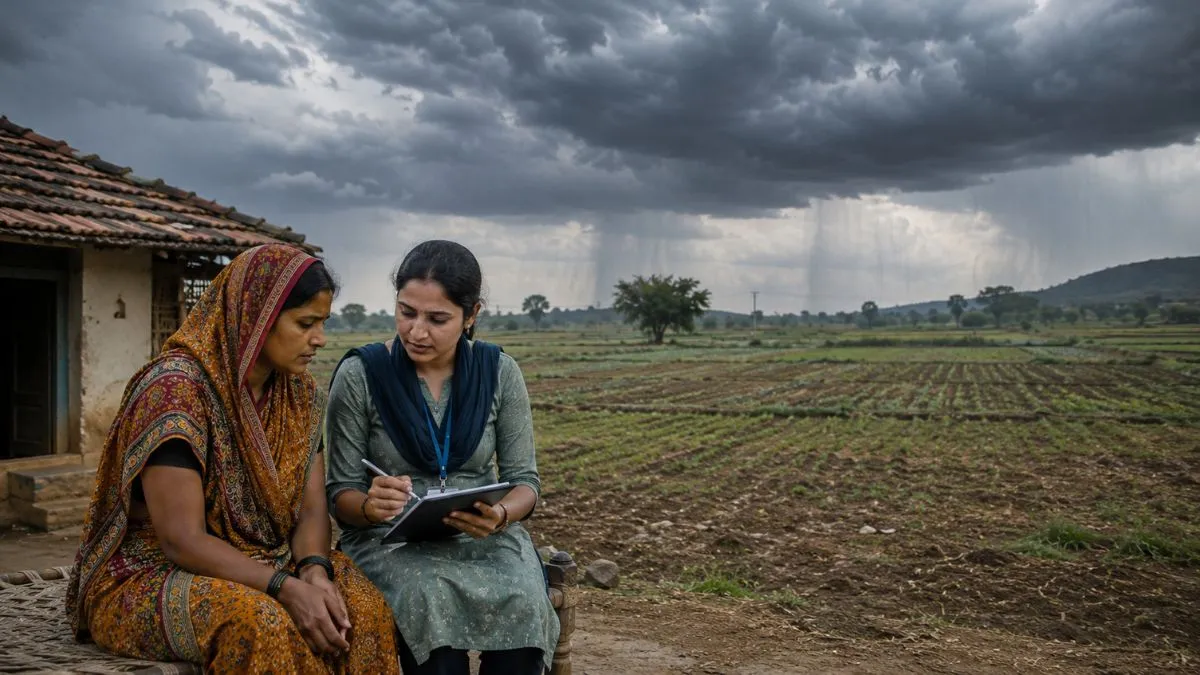
For decades, the Indian microfinance sector has viewed the monsoon as a familiar variable in the lending cycle. Good rainfall meant stronger agricultural output, healthier household incomes and better repayment behaviour. A weak monsoon warranted caution. But climate patterns today are making that relationship far more complex.
It is no longer the quantity of rainfall that matters – it is the predictability of it.
This year’s uneven monsoon has once again demonstrated how quickly weather volatility can influence lending decisions. After signs of recovery over the previous quarter, microfinance disbursements have slowed as lenders adopt a more measured approach in regions affected by patchy rainfall. The shift is not simply about protecting portfolios; it reflects a growing recognition that climate uncertainty is increasingly shaping borrower cash flows, credit demand and repayment capacity.
The implications extend well beyond agriculture. While a significant share of microfinance borrowers are connected to farming, many derive their incomes from allied activities such as livestock, dairy, retail trade and small rural enterprises. These livelihoods are deeply interlinked with the rural economy. When rainfall is delayed or uneven, agricultural incomes weaken, local consumption softens and liquidity tightens across communities. The effects cascade through rural markets long before they are reflected in portfolio quality metrics.
This is why leading lenders are becoming more selective with capital deployment. Rather than pursuing growth for its own sake, institutions are calibrating disbursements based on regional rainfall patterns, crop conditions and emerging repayment trends. According to industry data, the sector witnessed a moderation in lending during the first quarter as institutions prioritised portfolio quality amid an uneven monsoon and uncertain rural demand. This marks a notable shift from expansion-led strategies towards resilience-led growth.
The larger lesson is that climate risk is steadily becoming credit risk.
Traditional underwriting models have relied heavily on borrower history, income stability and local market dynamics. Increasingly, these variables need to be complemented by climate intelligence. Rainfall distribution, water availability, crop health and regional weather anomalies are becoming relevant indicators of future portfolio performance. Institutions that integrate these signals into their credit and risk frameworks will likely be better positioned to navigate increasingly volatile operating conditions.
The microfinance sector has built its success on understanding underserved customers better than conventional lenders. The next phase of that evolution lies in understanding the environment those customers operate in just as well.
As climate variability becomes the norm rather than the exception, resilience – not growth alone – will define leadership. For microfinance institutions, the question is no longer whether the monsoon matters. It is whether their lending models are evolving quickly enough to reflect the new reality.