


-
 April 7, 2026
 -
 Comment: 0
Green Homes in India : Do Borrowers Really Benefit Financially
Sustainability is gradually reshaping India’s real estate sector. Rising energy costs, increasing environmental awareness, and supportive government policies are pushing developers and homebuyers to consider greener housing options.
The shift is also reflected in the market’s growth: according to the Indian Green Building Council, India has already certified over 10 billion square feet of green building space, and the country’s green building footprint is expected to expand significantly in the coming years as developers increasingly integrate sustainability into new projects.
But while green homes are often associated with environmental responsibility, many buyers still ask a practical question: do green homes actually provide financial benefits for borrowers in India?
From the perspective of Athena Advisors, the answer is increasingly yes – particularly as energy efficiency, financing incentives, and long-term cost savings begin to influence purchasing decisions in India’s residential property market.
What Defines a Green Home in India?
A green home is designed to reduce environmental impact while improving energy efficiency and living comfort. In India, these properties often incorporate:
· Energy-efficient lighting and appliances
· Better insulation and ventilation systems
· Rainwater harvesting systems
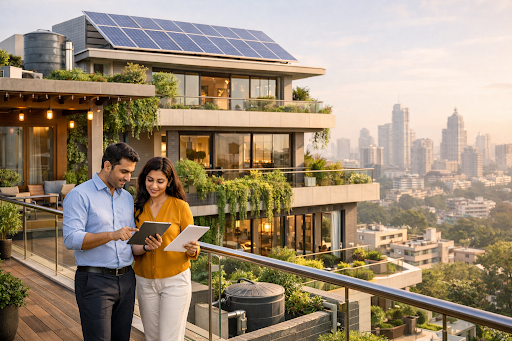
· Solar panels or renewable energy integration
· Sustainable building materials
· Smart energy management systems
Many developments are certified by organisations such as the Indian Green Building Council (IGBC) or Green Rating for Integrated Habitat Assessment (GRIHA), which evaluate buildings based on sustainability and efficiency standards.
These certifications are increasingly becoming a signal of quality and long-term efficiency for buyers.
Lower Energy Bills Can Reduce Household Costs
One of the most immediate financial advantages of green homes in India is lower electricity and water consumption.
With India’s hot climate and increasing reliance on air conditioning, energy costs can be a significant part of household expenses. Green homes are typically designed to reduce cooling needs through better ventilation, shading, and insulation.
Features such as solar panels, energy-efficient appliances, and natural lighting can help households significantly reduce electricity consumption.
For borrowers, these savings mean lower monthly operating costs, which improves the overall affordability of homeownership.
Banks Are Beginning to Offer Green Financing
India’s financial sector is gradually recognising the benefits of sustainable housing. Some banks have started introducing green home loans with incentives for environmentally friendly properties.
Institutions such as State Bank of India and HDFC Bank have offered preferential loan terms for homes certified under recognised green building standards.
These incentives may include:
· Slightly lower interest rates
· Processing fee concessions
· Financing benefits for certified green projects
While green financing is still developing in India, it reflects a broader shift toward sustainable real estate investment.
Long-Term Value and Market Demand
Energy efficiency is gradually becoming a value driver in India’s real estate market.
As urban buyers become more environmentally conscious and energy prices continue to rise, properties that offer lower operating costs are becoming increasingly attractive.
Green homes may therefore benefit from:
· Stronger long-term demand
· Better resale prospects
· Greater resilience to future environmental regulations
For investors and homeowners alike, these factors can contribute to long-term financial stability in property ownership.
Rental Appeal in Urban Markets
Green housing also has growing appeal in India’s rental markets, particularly in major cities such as Mumbai, Bengaluru, and Pune.
Young professionals and environmentally conscious tenants are increasingly attracted to properties that offer:
· Lower electricity bills
· Better indoor air quality
· Modern, energy-efficient infrastructure
For property investors, this can translate into higher tenant demand and improved rental stability.
The Upfront Cost Question
One challenge often associated with green homes in India is higher upfront construction or purchase costs. Sustainable materials, energy-efficient technologies, and advanced design techniques can increase the initial development budget compared with conventional buildings. According to industry studies, constructing a green building in India typically costs around 3–5% more than a traditional building, although the premium can vary depending on the level of sustainability features and certification standards.
Research by Green Rating for Integrated Habitat Assessment (GRIHA), one of India’s national green building rating systems, also suggests that many green projects now have an additional cost of roughly 0–4% compared with
standard buildings, reflecting how technological improvements and wider adoption have reduced the earlier cost gap.
In some projects with more advanced sustainability ratings, the premium may reach 7–10% of construction costs, particularly when incorporating renewable energy systems, high-performance materials, and advanced environmental technologies.
However, these upfront costs are often offset by long-term operational savings, as green buildings in India can reduce energy consumption by 30–50%, lowering electricity expenses for homeowners over time.
The Bottom Line
Green homes in India are no longer just about environmental responsibility – they are gradually becoming a financially sensible choice for borrowers and investors.
Lower operating costs, emerging green financing options, and increasing market demand are helping make sustainable housing more attractive from a financial perspective.
At Athena Advisors, we see sustainability playing an increasingly important role in shaping real estate decisions. As India’s property market continues to evolve, green homes are
likely to become a key factor in determining long-term value, affordability, and investment potential.