


-
 November 11, 2026
-
 Comment: 0
Fraud in Digital Lending: The Growing Importance of RCU and FCU Frameworks
The Changing Fraud Landscape
The rapid digitisation of India’s lending ecosystem has improved customer onboarding, credit assessment and loan disbursement. However, increased reliance on digital processes has also exposed lenders to new vulnerabilities, including identity theft, forged documentation, income misrepresentation and organised loan fraud.
As banks and Non-Banking Financial Companies (NBFCs) expand their lending operations, traditional credit appraisal alone may not be sufficient to identify deliberate misrepresentation. Robust Risk Containment Unit (RCU) and Fraud Control Unit (FCU) frameworks are therefore becoming increasingly important for protecting portfolio quality.
Understanding RCU and FCU
Risk Containment Unit (RCU)
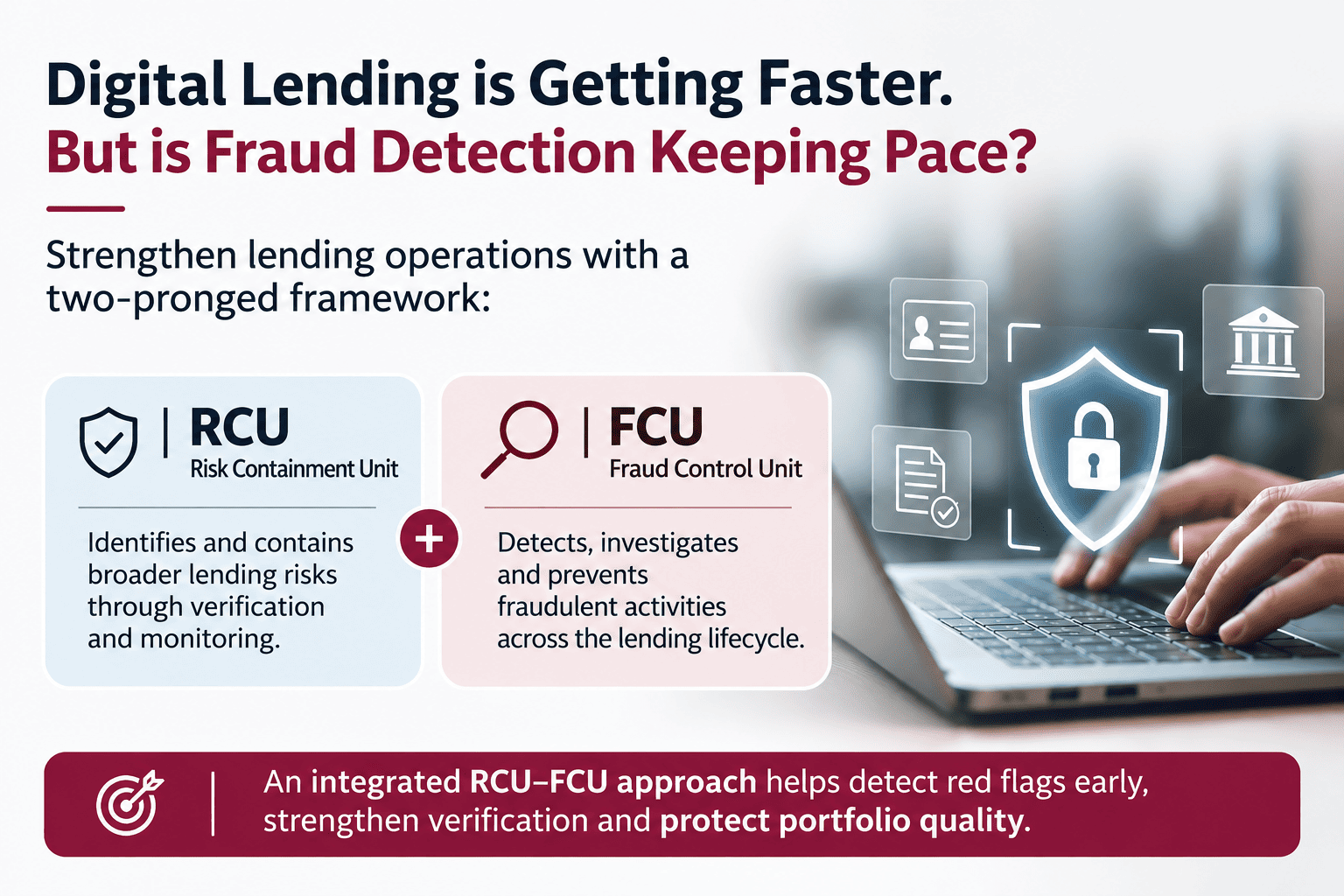
RCU focuses on identifying, assessing and containing potential risks through independent verification and monitoring. Its activities include document authentication, database checks, transaction analysis and examination of suspicious applications. It also helps identify recurring discrepancies across branches and sourcing channels, enabling lenders to strengthen their underwriting controls.
Fraud Control Unit (FCU)
FCU focuses specifically on detecting, investigating and preventing fraudulent activities across the lending lifecycle. Its responsibilities include investigating identity and document fraud, identifying suspicious sourcing practices, examining potential collusion and analysing recurring fraud patterns.
While RCU supports broader risk containment, FCU has a targeted focus on fraud detection and investigation. Together, they strengthen the institution’s ability to identify vulnerabilities and prevent potential losses.
The Importance of an Integrated Approach
RCU and FCU are most effective when their findings are incorporated into a common risk management framework.
For instance, repeated documentation discrepancies associated with a particular sourcing intermediary may trigger an FCU investigation into potential collusion. Similarly, fraud patterns identified through FCU investigations can help RCU strengthen verification procedures and monitoring mechanisms.
This integration enables lenders to identify risks across application sourcing, credit appraisal, disbursement and post-disbursement monitoring rather than relying solely on corrective action after losses occur.
Technology and Regulatory Developments
Technology can further strengthen fraud prevention through automated document verification, transaction monitoring and portfolio-level analytics. Artificial Intelligence and Machine Learning can help identify unusual borrower patterns and suspicious transactions, complementing human investigation.
The Reserve Bank of India’s Digital Lending Directions, 2025 emphasise enhanced due diligence of Lending Service Providers (LSPs) and monitoring of digital lending arrangements. Its Master Directions on Fraud Risk Management in NBFCs, including Housing Finance Companies, 2024 also establish expectations around fraud prevention, early detection and governance.
These developments reinforce the need for structured verification, clear accountability and effective monitoring systems.
Conclusion
As digital lending expands, effective fraud management will be critical to maintaining portfolio quality and sustainable growth. RCU and FCU frameworks offer complementary capabilities by combining broader risk containment with targeted fraud detection and investigation.
When supported by technology, strong governance and clearly defined processes, these functions can become integral to a lender’s risk management architecture. Ultimately, sustainable lending growth depends not just on faster disbursements, but on ensuring that credit reaches genuine borrowers while minimising avoidable risks.