


-
 September 18, 2026
 -
 Comment: 0
Why Financial Literacy Should Begin Before the First Loan
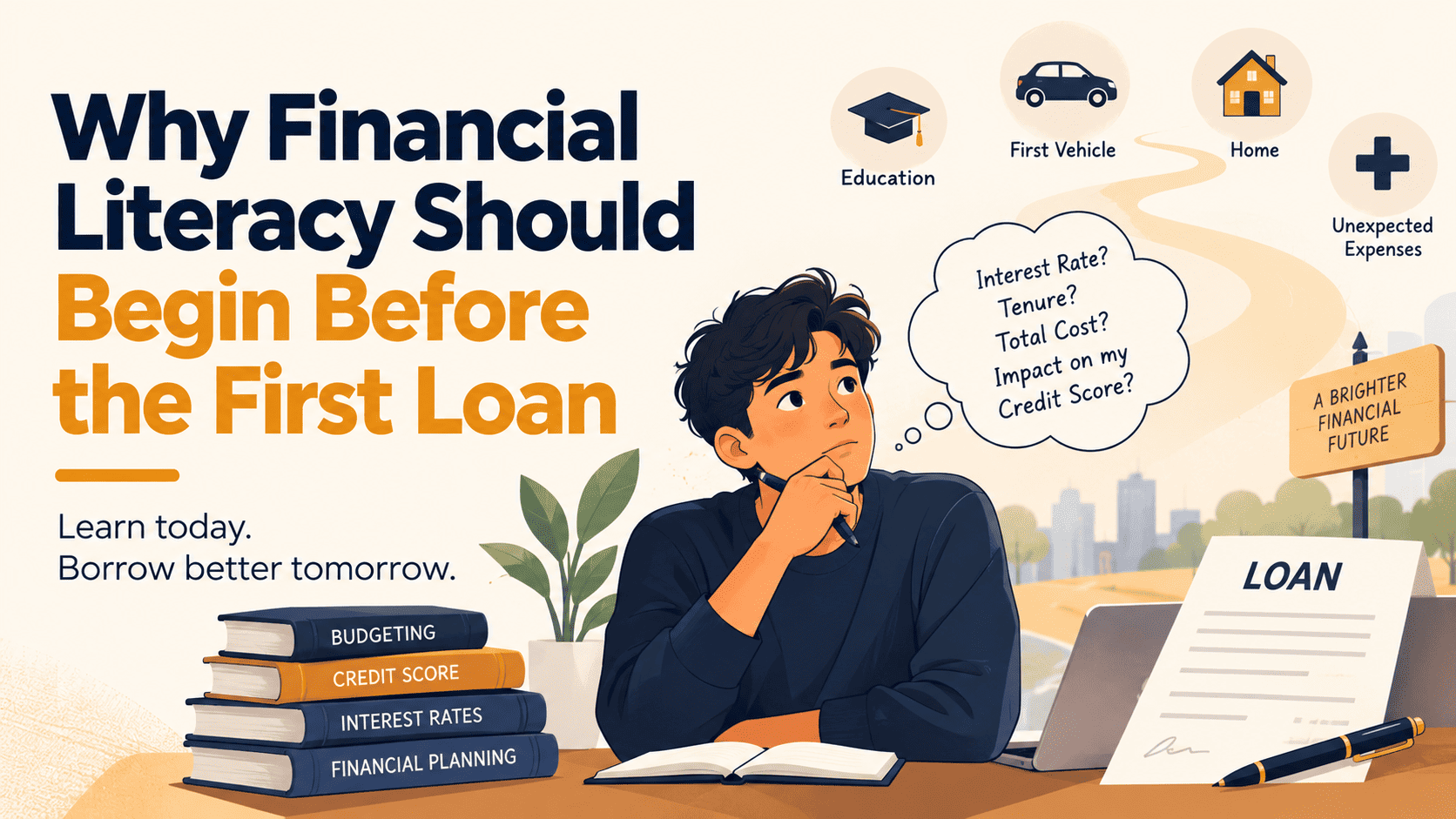
Taking a loan for the first time is a common milestone in most people’s financial lives. It may happen while pursuing higher education, buying a first vehicle, or managing an unexpected expense. In most cases, this is also the first time an individual is required to understand concepts such as interest rates, tenure and repayment obligations, often while the loan is already being processed. Building financial literacy before this stage, rather than during it, can make a meaningful difference to how well that first borrowing experience is managed.
The terms of a loan are fixed at the time of signing. The interest rate, tenure, processing fees and prepayment charges are all decided before the agreement is executed. A borrower who does not understand the difference between a flat interest rate and a reducing balance rate may not realise that the actual cost of two loans can differ significantly, even when the advertised rate looks similar. The Reserve Bank of India (RBI) requires lenders to disclose these terms clearly, including through the Most Important Terms and Conditions (MITC), but this disclosure is only useful to a borrower who knows what to look for.
The impact of a first loan can also extend well beyond its tenure. Credit Bureaus maintain a record of an individual’s credit accounts and repayment behaviour over time. Factors such as payment history, credit utilisation, the age of credit accounts and recent credit enquiries can influence a CIBIL Score. A missed or delayed payment on an early loan can affect a Credit Report for years, even after the loan itself has been repaid or closed.
It is also worth noting that financial products are often introduced at times when a person is least able to evaluate them carefully. Loans for education, weddings or medical expenses tend to come with a degree of urgency, leaving little time to read through the loan agreement in detail. When financial literacy is left until this stage, it has to compete with time pressure and the guidance of parties who may have a financial interest in the borrower proceeding quickly.
At the same time, financial education taught only in a classroom, well before it is actually needed, does not fully solve this problem either. Concepts introduced without any immediate application are easily forgotten by the time a loan is actually required. This suggests that the more effective approach may combine early exposure to basic financial concepts with clear, independent guidance made available at the time an individual is actually considering a loan.
For a first-time borrower, this means having a working understanding of a few essentials before signing any loan agreement: how interest is calculated, what a Credit Report reflects, how repayment behaviour affects a Credit Score, and what questions to ask a lender before proceeding. None of this requires advanced financial training. It simply requires exposure to these concepts before the pressure of an urgent borrowing decision makes them harder to absorb.
A loan is one of the few financial decisions where understanding often arrives after the commitment has already been made. Building financial literacy earlier does not remove the need for guidance at the time of borrowing, but it does help ensure that guidance reaches a borrower who is already prepared to use it well.