


-
 September 1, 2026
 -
 Comment: 0
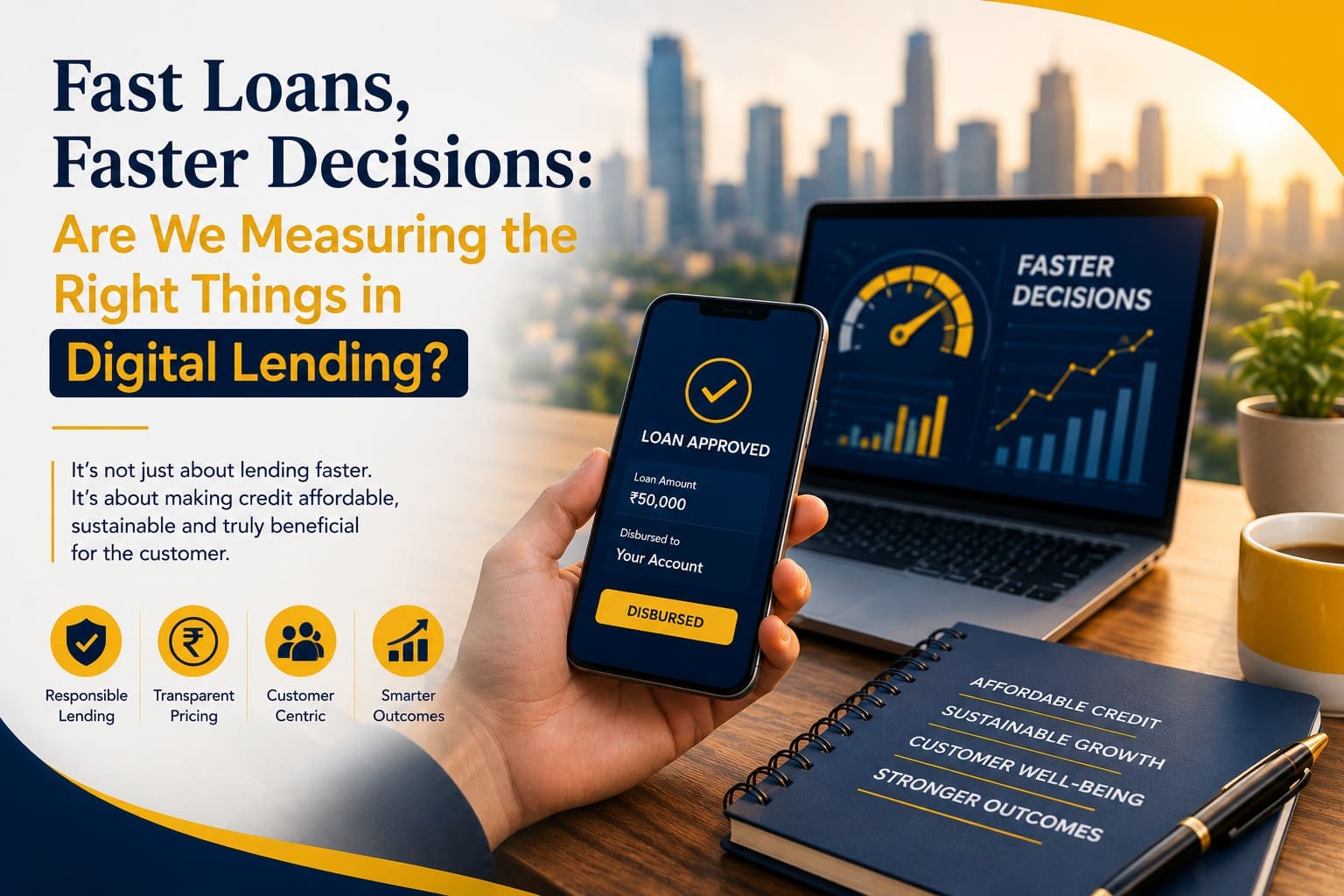
Fast Loans, Faster Decisions: Are We Measuring the Right Things in Digital Lending?
A few years ago, India’s digital-lending ecosystem faced a very different problem.
Instant-loan apps many of them linked to overseas operators were offering quick, unsecured credit at extremely high costs, often targeting borrowers with limited access to formal finance. Concerns around aggressive recovery practices, excessive charges, data misuse and debt cycles eventually led to significant regulatory intervention.
The ecosystem has changed since then.
But an important question remains:
Did we eliminate the underlying problem or did we simply change the way the business model operates?
- From Unregulated Apps to Regulated Digital Lending
The post-crackdown lending environment is fundamentally different. Regulatory oversight has strengthened, RBI-regulated entities have greater accountability, and digital-lending requirements have introduced stronger safeguards around disclosures, data and customer protection.
Yet the underlying economics of short-tenure, unsecured credit remain challenging.
A loan that appears inexpensive when viewed through its stated interest rate can have a significantly higher annualised cost once applicable fees and the short tenure are considered. This is why the RBI’s digital-lending framework places emphasis on disclosure of the Annual Percentage Rate (APR) and the Key Fact Statement (KFS).
The issue, therefore, is not simply whether a lender is regulated.
It is whether the customer’s actual experience of credit remains affordable and sustainable.
- The Risk Is Not Always the First Loan
The more subtle risk may emerge after the initial disbursement.
Digital lending makes it possible for customers to access additional credit quickly. Repeat loans and top-ups can be perfectly legitimate when driven by genuine financial needs and supported by repayment capacity.
But persistent refinancing, frequent top-ups or increasing exposure can also indicate that a customer is using new credit to manage existing obligations.
This creates an important distinction:
Access to credit is not the same as healthy access to credit.
For lenders, this means that traditional metrics such as disbursement growth, approval rates and turnaround time need to be viewed alongside customer-level and portfolio-level outcomes.
- What Should Lenders Measure?
A more mature digital-lending model could evaluate credit across four dimensions:
- Cost — What is the customer’s actual annualised cost of borrowing?
- Capacity — Can the borrower comfortably service the obligation alongside existing liabilities?
- Behaviour — Are repeat borrowing and top-up patterns consistent with genuine credit needs or emerging stress?
- Outcome — What happens to the customer and the account after disbursement?
These metrics do not replace growth metrics.
They add another layer to them.
Because the objective of responsible lending is not simply to prevent bad loans it is to ensure that good credit reaches the right customer in the right amount at a sustainable cost.
- The Opportunity for the Industry
This is where regulated lenders have an opportunity to differentiate themselves.
The same technology that enables instant credit decisions can also be used to strengthen affordability assessment, identify unusual borrowing behaviour and create early-warning mechanisms.
The objective should not be to make digital lending slower.
It should be to make the decision-making smarter than the disbursement process is fast.
The industry has already solved much of the problem of access.
The next challenge is solving for quality of access.
The Next Measure of Digital Lending
The question facing the industry is therefore no longer simply:
“How fast can we lend?”
It is:
“Can we make credit faster without making financial stress faster?”
The answer lies in moving from disbursement-led lending to outcome-led lending where portfolio growth, affordability, customer behaviour and long-term credit performance are considered together.
The future of digital lending will not be defined by how quickly a loan is disbursed, but by how responsibly that speed is used.